Wholetime firefighter recruitment
Application for a wholetime firefighter roles with the Scottish Fire and Rescue Service

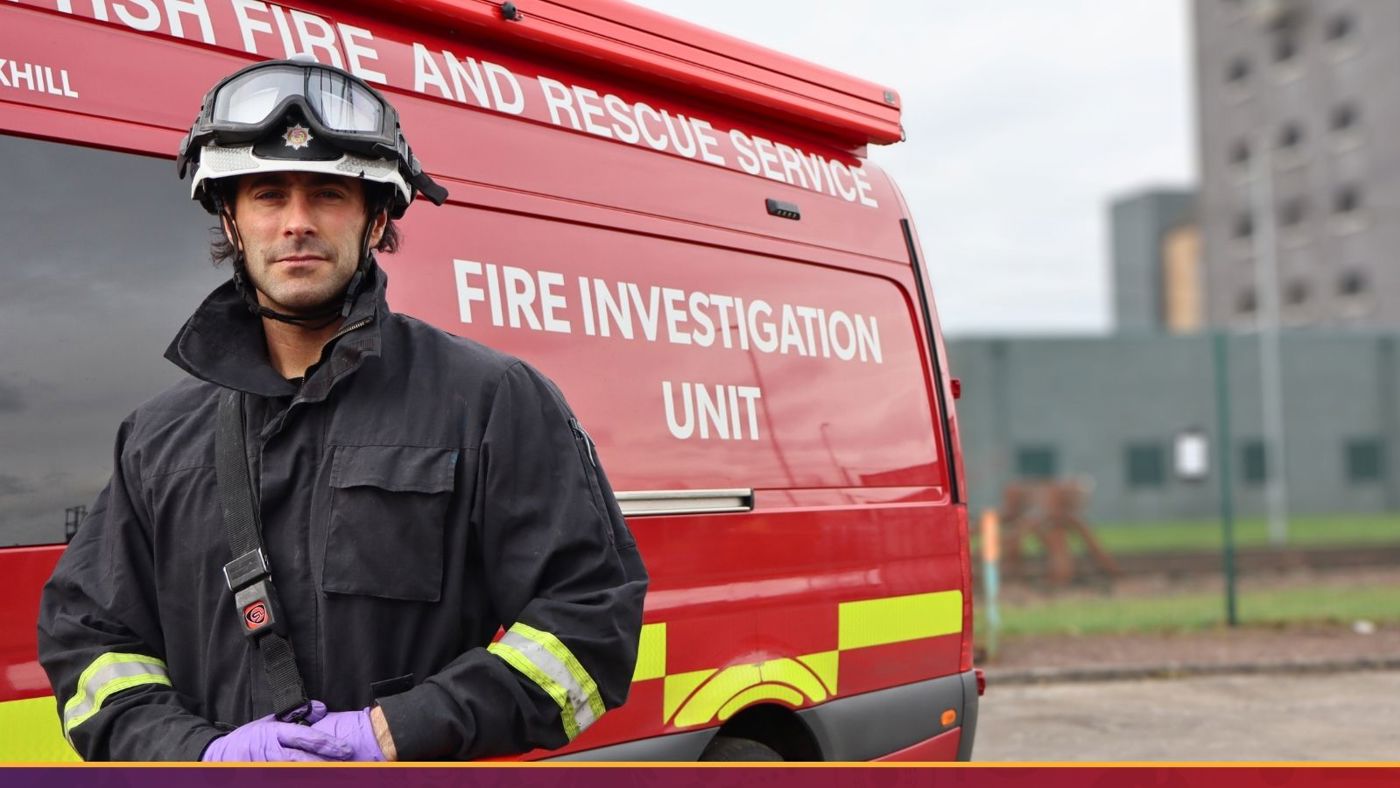
A recent fire investigation has highlighted how specialist skills within the Service can help uncover the truth behind serious incidents.
A fragment of soot-covered glass was the key piece of evidence that helped fire investigators rule out a suspected deliberate fire attack after a house fire in West Lothian.
For Watch Commander Fraser Caddens, this case is a clear example of how modern firefighting goes beyond extinguishing the flames. It is about science, patience and attention to details, and it is a role he never imagined he would one day hold.
The incident in Bathgate last year initially appeared to point towards a deliberate fire. There were threats towards the property, a smashed window, a shovel in the garden and a lighter nearby, which all led to suspicions that the property had been firebombed
Fraser, a fire investigation officer at the Scottish Fire and Rescue Service (SFRS), said: “Everything about the scene was suggesting the fire was set deliberately.
“But when we looked closer, the physical evidence didn’t match the story.”
Inside the living room, Fraser and other investigators focused on fragments of broken window glass scattered across the carpet.
Fraser explained: “If the windows had been smashed before the fire started, the glass would have landed on a clean surface.
“The fire that followed would burn around it, leaving the underside of the glass and the carpet beneath protected from damage.”
Instead, both the carpet and glass were coated in soot.
He continued: “That tells you the fire was already burning before the glass broke down.
“The heat caused the window to fail. It wasn’t intentionally smashed from outside.”
If a kid from North Glasgow who left school at 15 can end up working alongside forensic teams and standing in court as an expert witness, then anyone can.
Further examinations traced the origin of the fire to an electrical fault in a strip adaptor in the area where the window was broken. The lighter and shovel outside were unrelated.
That small detail changed everything. What had looked like a deliberate fire was confirmed to be an accidental electrical fire.
He said: “Our job is to establish the truth. Sometimes we help prosecute people. Other times we stop innocent people from being blamed.”
Fraser, 35, grew up in Glasgow and joined what is now called Youth Volunteer Scheme as a teenager in 2004. He later joined as a wholetime firefighter in 2011 and has since worked his way up the ranks, now playing an integral role as one of 18 specialist fire investigation officers covering the whole of Scotland.
They work alongside police and forensic specialists to determine the origin and cause of serious fires. Their findings inform criminal cases, safety campaigns, and support families seeking answers after traumatic events.
To become a fire investigator, firefighters must first reach a minimum rank of watch commander. From there, they complete specialist qualifications, including Skills for Justice Awards, which enable them to take part in joint investigations with partner agencies and provide expert evidence in court.
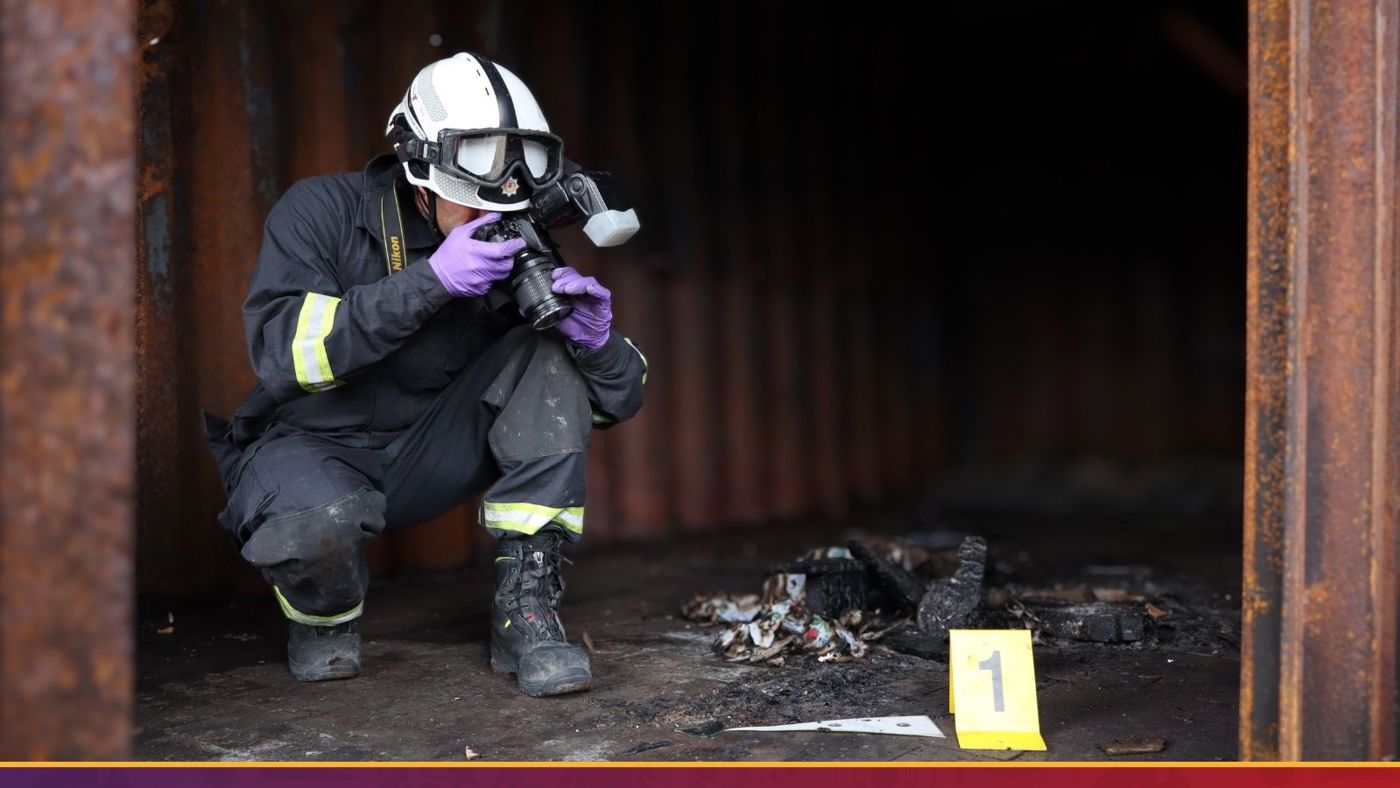
Fraser, who was also part of the fire investigation team mobilised to the scene of a fire on Union Street, Glasgow, recently, said: “The training is demanding. It involves specialist courses, practical and written exams, scene assessments and producing detailed reports that must withstand scrutiny from defence lawyers.
“You’re not guessing. You’re researching, you're testing your theories and use the scientific method.”
He believes experience as a frontline station-based firefighter and an officer is essential.
He said: “There’s more to this job than people realise.
“I still attend fires, but now I get to answer the question that always stuck with me as a firefighter: how did it start?
“You need to want to get to the bottom of things. You need to be prepared to study, to test your theories and to look at the smallest details and go those extra miles.
“A tiny piece of glass can change the entire outcome of a case.”
As SFRS prepares to recruit the next generation of wholetime firefighters, Fraser hopes his story can encourage others to consider a career in the emergency services. He said: “Whatever you put into this job, you get back. There are opportunities you don’t even know exist when you first join.”
Assistant Chief Officer David Farries said: “We are looking for people from all backgrounds who are committed, resilient, and motivated to serve the communities of Scotland.
“Whether you are interested in frontline operational response, prevention work, or developing into specialist roles, the Service provides pathways, professional training and ongoing support to help you build a long-term career.
“Our firefighters attend some of the most challenging incidents, but they also play a vital role in educating communities, reducing risk and keeping people safe.
“I would encourage anyone who is considering applying to find out more about what the role involves and take that first step.”
Recruitment for wholetime firefighters in the SFRS opens Tuesday, 24 March at 12.30pm until Friday, 27 March at 12.30pm. For more information on eligibility and how to apply, visit firescotland.gov.uk.
Application for a wholetime firefighter roles with the Scottish Fire and Rescue Service
Find out what firefighters do and what skills they need.
Find out more about the role of a wholetime firefighter at SFRS and how to apply.