Statistics
Learn about how we publish our data, what data we publish, and downloads to the latest statistics.


New statistics from the Scottish Fire and Rescue Service show there were 31 fire fatalities in 2025-26, representing a reduction of nearly 14% from the previous year.
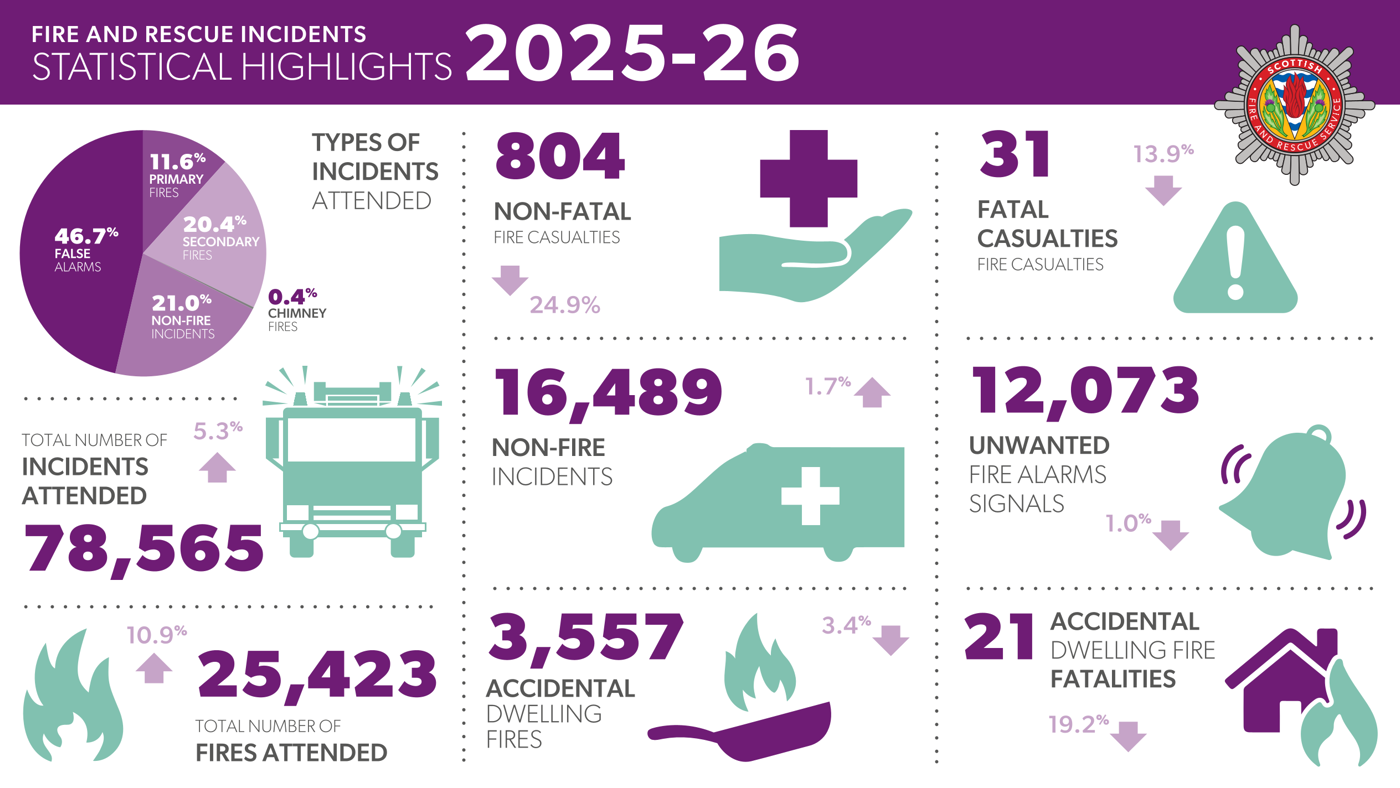
New statistics from the Scottish Fire and Rescue Service (SFRS) show there were 31 fire fatalities in 2025-26, representing a reduction of nearly 14% from the previous year.
The number of fires in Scottish homes also fell to its lowest point at 3,968 – a 30% reduction over the past decade.
SFRS Deputy Chief Officer (DCO) Andrew Watt said: “While I’m very pleased to see a further reduction in the number of fatalities from fires, every life lost is one too many and we remain committed to reducing this number.
“Unfortunately, we’ve also seen an increased number of fatalities from non-fire incidents. Firefighters are exposed to trauma at each one of these unfortunate incidents, so we are working to ensure they are well-supported with access to mental health and wellbeing services.
The number of fatalities from non-fire incidents, such as road traffic collisions, was 469 – an increase of 8.6% from last year’s statistics.
DCO Watt continued: “We’re also seeing more homes with smoke alarms and fewer chimney fires, which means more people are following established home safety guidance and taking steps to prevent fires before they can start.
“Fire and smoke alarms save lives and are essential for home safety.”
Firefighters attended more than 78,000 total incidents across Scotland in 2025-26 – an increase of nearly 4,000 from the previous year.
This includes 25,423 fire incidents (up 10.9%) and 16,489 non-fire incidents (up 1.7%), which include flooding and road traffic collisions.
Secondary fires, such as outdoor fires involving grassland or refuse, accounted for 16,033 fire incidents, and most of these fires were caused deliberately.
DCO Watt said: “We are seeing an increase in the number of outdoor fires being deliberately set which is concerning.
“This type of behaviour is dangerous, and it can lead to devastating consequences if the fire gets out of control and spreads, endangering communities and lives. Our staff across Scotland work extremely hard to engage with the public to prevent these types of incidents.
“We are committed to working with partners to prevent these incidents and engaging with the public to educate everyone on the extreme risk of setting deliberate fires.”
Unwanted fire alarm signals (UFAS) have continued to drop, falling to 12,073 – a reduction of 62% over the past three years. This follows a policy change from 2023 designed to reduce routine attendance for alarm activations at commercial buildings except in instances when there is a sleeping risk, or clear sign of fire.
DCO Watt added: "Changing how we respond to automatic fire alarms at commercial buildings has continued to help reduce the number of unnecessary blue light journeys undertaken by our firefighters.
“It’s encouraging to see, but we know there’s still work to do, and we remain committed to working with our partners and businesses to get it done.”
You can view our full statistics publication here.
Learn about how we publish our data, what data we publish, and downloads to the latest statistics.
Fire and smoke alarms are essential for home safety. Learn about what to buy, how to install them, and why you need them in your home
Deliberate fires can endanger lives and harm communities. It's important to take steps to prevent them in your area and keep everyone safe.