Scottish Fire and Rescue Service help British Army to test their medical skills
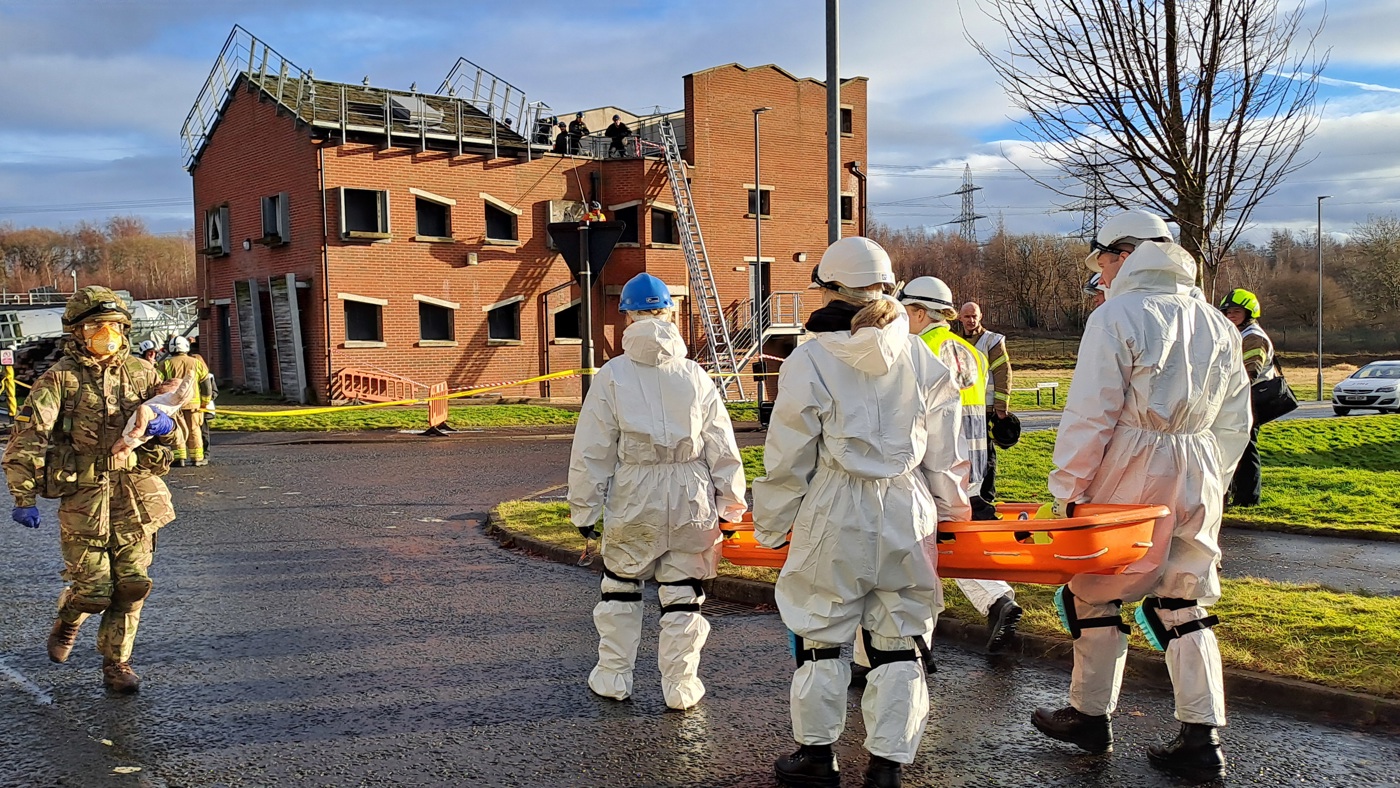
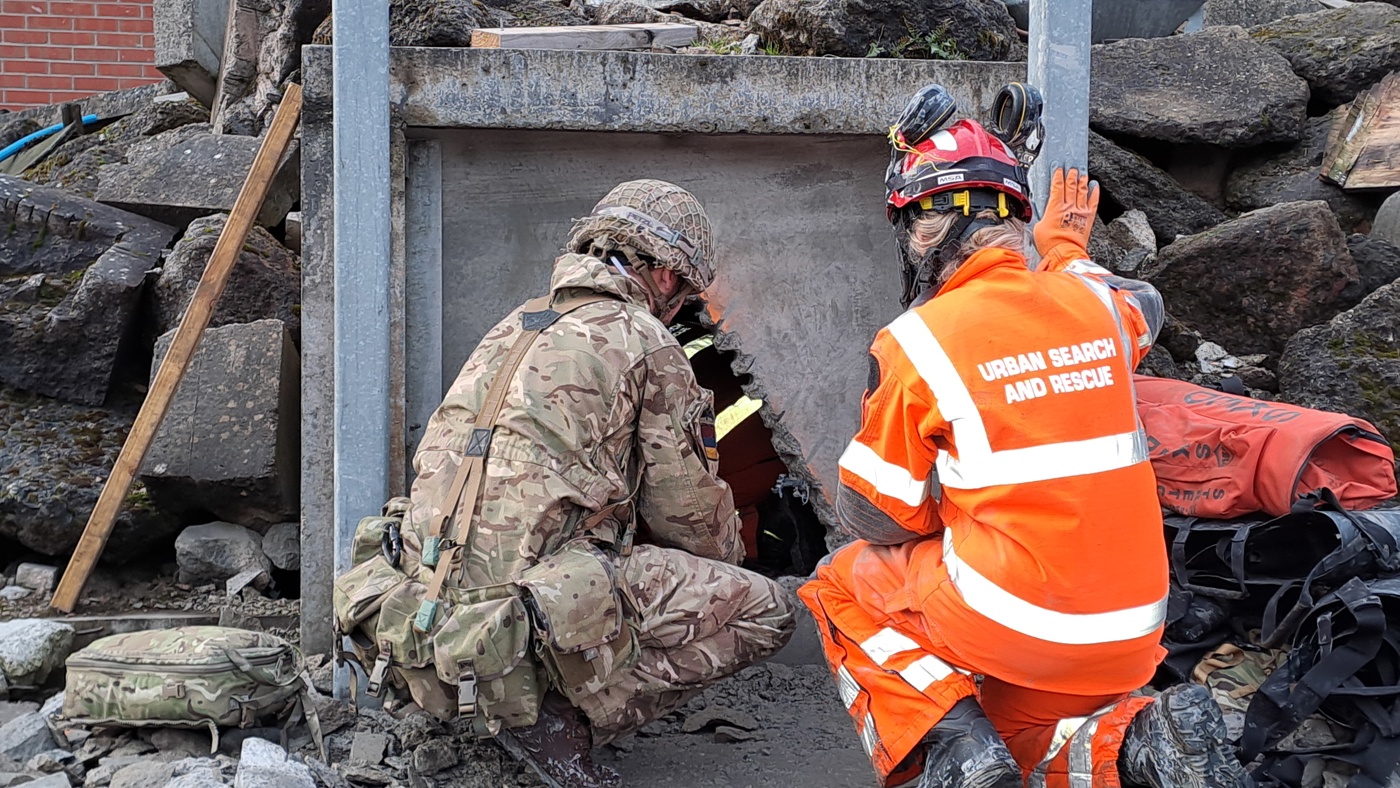
The Scottish Fire and Rescue Service (SFRS) has held a training exercise at their National Training Centre in Cambuslang which has helped the British Army reserves to test their specialist medical capabilities.
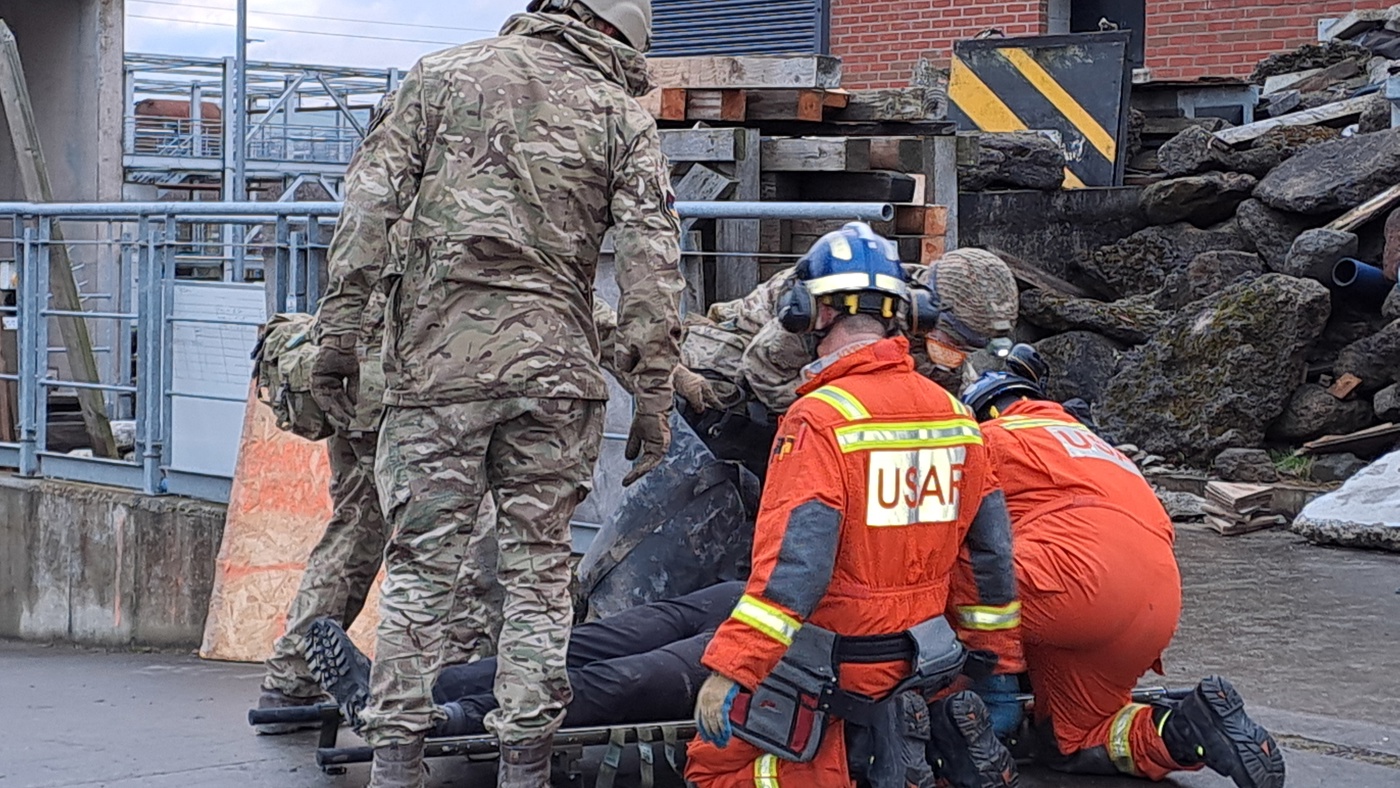
The multi-agency exercise involved approximately 70 SFRS personnel and included crews from Cumbernauld, Clarkston in Glasgow, rope teams from East Kilbride, Command Support Unit from Bellshill and UKISAR. They were joined by approximately 60 members of the British Army, alongside colleagues from SMARTEU (Scottish Multi-Agency Resilience Training and Exercise Unit), the Scottish Ambulance Service and Police Scotland.
The exercise was organised by the SFRS Specialist Rescue Training Department. SFRS has USAR (Urban Search and Rescue) teams which are strategically located across Scotland and include specially trained firefighters with skills and equipment to respond to the complex, high risk incidents where people are trapped, buried or missing as a result of building collapse, train derailments, industrial collapse, terrorism and confined space.
Members from the British Army’s 144 Parachute Medical Squadron (144 (Para) Med Sqn), took part in this multi-agency exercise. The Squadron has a detachment in Glasgow and form part of 16 Medical Regiment.
144 (Para) Med Sqn is the only reserve medical unit with a parachute capability. They provide vital medical and secondary healthcare support to both soldiers and civilians all over the world.
The scenario simulated a gas explosion in a village, creating multiple casualties and requiring the rapid deployment of an emergency field hospital.
This provided an opportunity to test interoperability between SFRS Specialist Rescue teams, including USAR and rope rescue, as well as joint working with partner agencies. An incident command element was also built into the exercise, allowing SFRS and partners to practise managing a complex, multi-agency response.
Scottish Fire and Rescue Service Watch Commander and UK-ISAR Crew Leader Steve Adams said: “Exercises like this are vital in strengthening our operational readiness and ensuring we continue to work effectively with our partners to keep communities safe.”
When asked what value this type of collaborative training brought to soldiers, Officer Commanding 144 (Parachute) Medical Squadron, Major Josh March, said:
“Soldiers and officers in 144 (Parachute) Medical Squadron are trained to treat the injured from the first minutes, through evacuation and into damage‑control surgery.
“As Army Reservists, many of us also work in the NHS and other emergency services. Collaborative training brings those skills together and keeps our medics sharp on the basics, while ensuring we’re ready to provide care in the most complex environments.”
Further information:
Urban Search and Rescue (USAR)
The Scottish Fire and Rescue Service have dedicated Urban Search and Rescue (USAR) teams strategically located across Scotland. These teams are specially trained firefighters with skills and equipment to respond to the complex, high risk incidents where people are trapped, buried or missing as a result of building collapse, train derailments, Industrial collapse, Terrorism and Confined space.
SFRS also support the British Government’s UKISAR (International Search and Rescue) efforts, which can see them deployed by the Foreign and Commonwealth Development Office (FCDO) to help countries affected by natural disasters such as earthquakes. They also provide humanitarian aid as well as restoring infrastructure.
UKISAR:
- The UKISAR team responds primarily to overseas urban search and rescue emergencies on behalf of the UK.
- Any UKISAR team deployed is self-sufficient upon arrival and provides its own food, water, shelter, sanitation, communications and all necessary equipment to undertake search and rescue operations for up to 14 days.
- This is to ensure no additional burden is placed upon a country already suffering demands on its resources following a sudden onset disaster.
- All UKISAR staff are trained to use specialist kit and the equipment being taken will ensure the team has the ability and capacity to lift, cut and remove concrete and rubble from collapsed structures.
British Army:
Information about 16 Medical Regiment
16 Medical Regiment supports 16 Air Assault Brigade, the British Army’s global response force. Its personnel - including consultant orthopaedic surgeons, dentists, nurses, and combat medical technicians - are specially trained to deploy by parachute, helicopter, or airlanding.
144 (Para) Med Sqn a dismounted role one unit, whose capabilities include role 2 care, light surgical teams and a light surgical group. Their specialist skills as an Army Reserve squadron allows them to support National resilience.